Research Overview
My work involves the design and use of purpose‑built tabletop systems to investigate physically driven phenomena under controlled conditions. I study a set of distinct physical systems—including thin sheets, elastic filament assemblies, floating ice blocks, and granular structures—each selected to address a specific physical question. A recurring question across these studies is how geometric constraints and externally imposed driving conditions shape system‑specific responses, including the emergence of collective or coordinated behavior from simple interactions. Within each project, carefully designed measurements are used, and where appropriate, analysis or modeling is employed to relate observed responses to the underlying physical mechanisms.
My Ongoing Research: architected granular metamaterials for impact mitigation
I am developing architected granular systems to investigate how geometric organization shapes mechanical response under impact loading. The systems consist of discrete granular elements assembled into three‑dimensional architectures that allow controlled internal rearrangements while maintaining overall structural cohesion.
The work combines custom impact experiments with discrete element method (DEM) simulations in LAMMPS to study force transmission, dissipation pathways, and the role of geometric architecture in shaping collective mechanical response. Experimental and numerical results are currently being synthesized into a manuscript.
[Representative figures will be added upon publication.]
This work was presented at the APS March Meeting 2026.
My PhD Research Projects
Below are selected research projects developed during my PhD.
1. Memory in cyclically crumpled sheets
Published in PRR (2024): Memory in cyclically crumpled sheets
This study examines how thin elastoplastic sheets evolve structurally when subjected to repeated mechanical deformation. Repeated cyclic twisting of thin elastoplastic sheets leads to mechanical memory whose stability depends on the amplitude of deformation. Across all loading conditions, quantitative measurements show that the mean curvature and total crease length evolve logarithmically with cycle number, reflecting progressive training of the plastic response. At fixed twisting amplitudes, curvature fields sharpen and localize, converging to repeatable deformation patterns. Increasing the twisting amplitude destabilizes established crease networks, leading to reorganization and partial erasure or rewriting of memory.
Methods
- Quasi-static cyclic deformation of thin elastoplastic sheets
- Quantitative measurements tracked over hundreds of repeated deformation cycles
- Surface geometry and curvature characterization using laser profilometry
.png)
Mov. 1: Qualitative demonstration of cyclic twisting with a visible laser cross‑section; quantitative analysis is reported in the published manuscript.
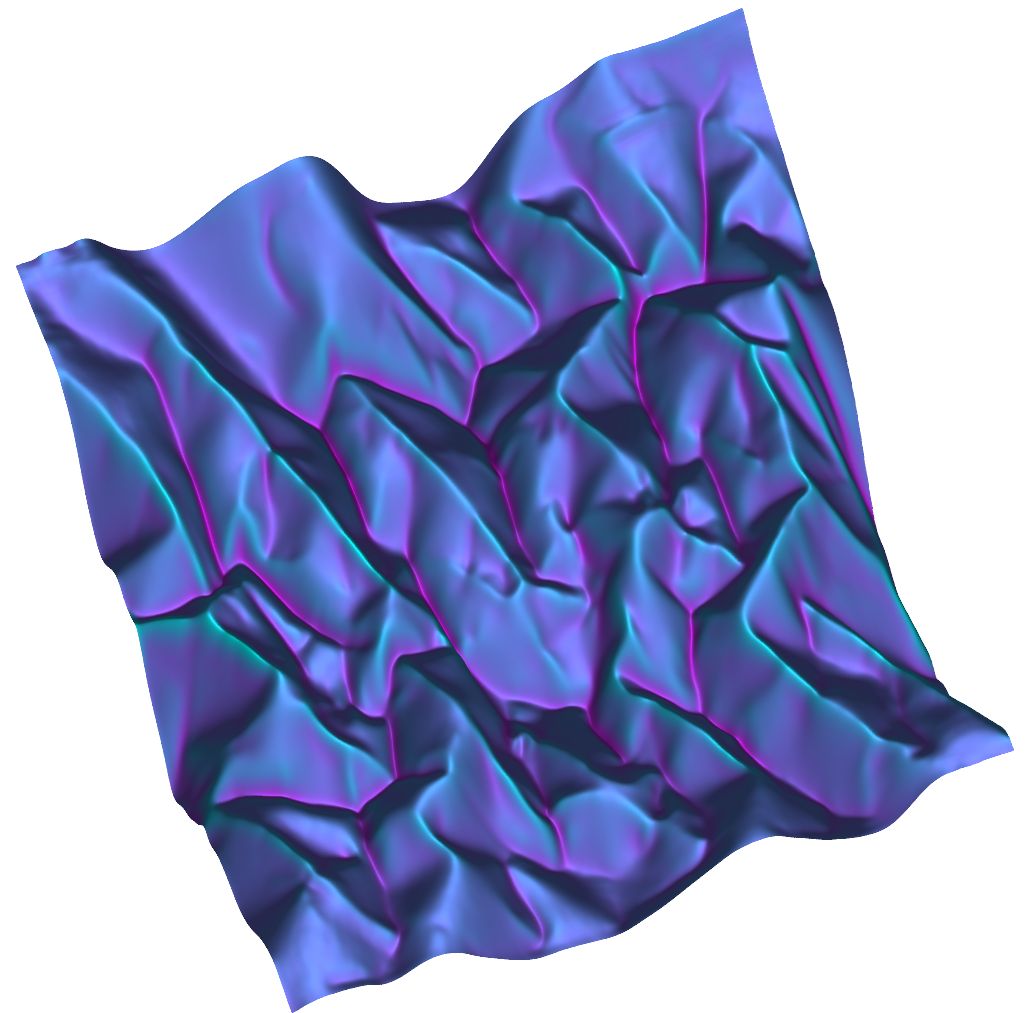
Figure 3: Representative 3D surface reconstruction illustrating localized curvature development under cyclic loading.
[Note: Figures and movies are shown for qualitative illustration; quantitative details are reported in the corresponding publication.]
2. Bundling Architecture of Elastic Filaments Under Twist
Published in PRE (2025) [Editors' Suggestion]: Bundling architecture in elastic filaments with applied twist
Axial twisting of initially parallel elastic filaments leads to geometric reorganization and bundling into helical assemblies. Experiments show that increasing twist induces a radial instability in which filaments migrate inward and pack into a central bundle. X‑ray tomography reveals that, despite this migration, the filaments maintain a nearly constant helical inclination angle throughout the bundle. For sufficiently large filament number or applied twist, the internal packing becomes disordered. Measurements of bundle length and torque are quantitatively described by an energy‑minimization framework that accounts for filament elasticity and bundle geometry, linking the observed structural evolution to the nonlinear mechanical response.
Methods (Summary)
- Axial twisting experiments on assemblies of elastic filaments
- Measurements of bundle geometry, length, and torque as functions of applied twist and filament number
- Internal structural characterization using x-ray tomography
- Energy-minimization modeling relating filament elasticity and bundle geometry to mechanical response
Mov. 2:Twist induced bundling of soft filaments (n=16).
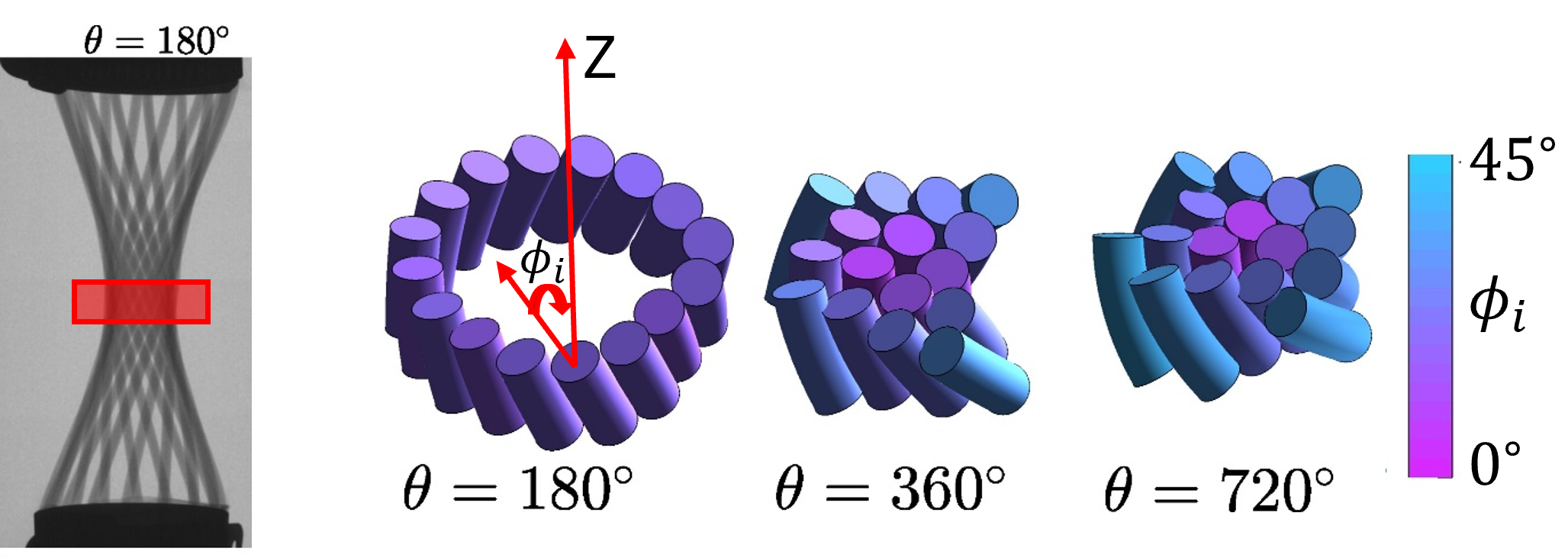
Figure 6: The mid-section of the bundle from X-ray images is integrated and rendered. The colorbar shows the inclination angle of the filaments relative to the vertical line parallel to the axis of twist.
3. Self-propulsion of floating ice blocks caused by melting
Published in PRF (2026): Self-propulsion of floating ice blocks caused by melting
Featured by : APS Physics — “Melting Gives Ice Block a Push”
Highlighted by : Condensed Matter Journal Club (CMJClub) — “When active matter becomes its own fuel”
Asymmetric ice blocks are observed to undergo self‑propulsion while melting by extracting heat from the surrounding liquid. This heat extraction alters the local fluid density, generating buoyancy‑driven convection that transfers momentum to the ice block and results in directed motion. The propulsion speed is described using a momentum‑balance framework between the heat‑driven flow and hydrodynamic drag. Under sufficiently warm conditions, the same physical process can persist in saltwater, suggesting that melting‑associated buoyancy flows may contribute to the motion of icebergs in oceanic environments.
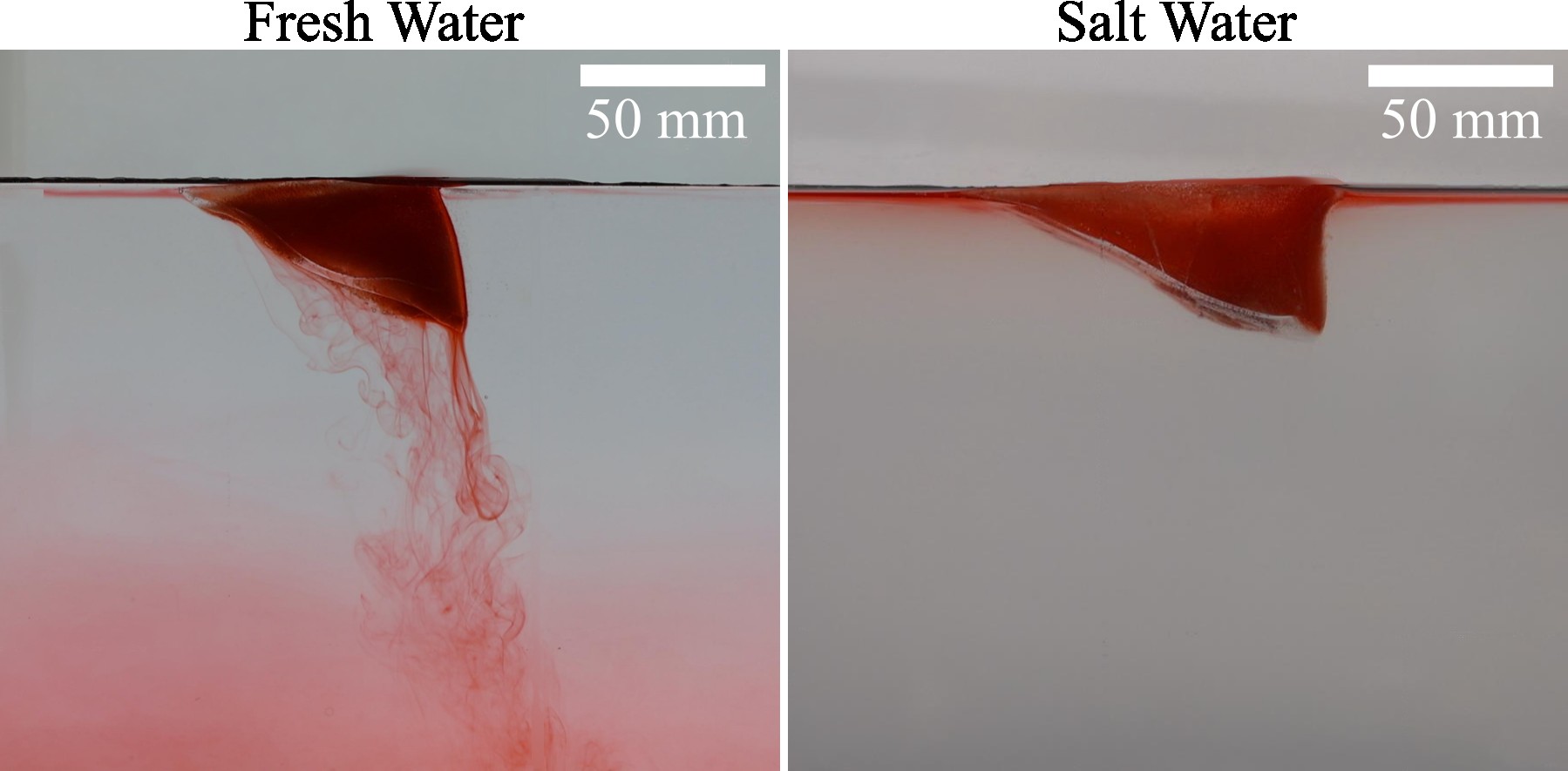
Clark University research news: “Why Do Traveling Icebergs Speed Up in Warmer Ocean Waters?”